In the heart of Nairobi’s bustling Gikomba market—one of Africa’s largest second-hand clothing hubs—a quiet fashion revolution is taking shape. Here, amidst mounds of discarded garments, a new generation of Kenyan designers is transforming textile waste into bold, expressive fashion statements that are beginning to gain international recognition.
Every year, Kenya imports nearly 200,000 tonnes of second-hand clothing from Europe, the U.S., and Asia. Much of it ends up in Gikomba market, a sprawling five-acre maze of stalls filled with garments—some wearable, many not. With roughly one-third of these clothes deemed unsellable or unwearable, they are often dumped in landfills, adding to the country’s mounting environmental crisis.
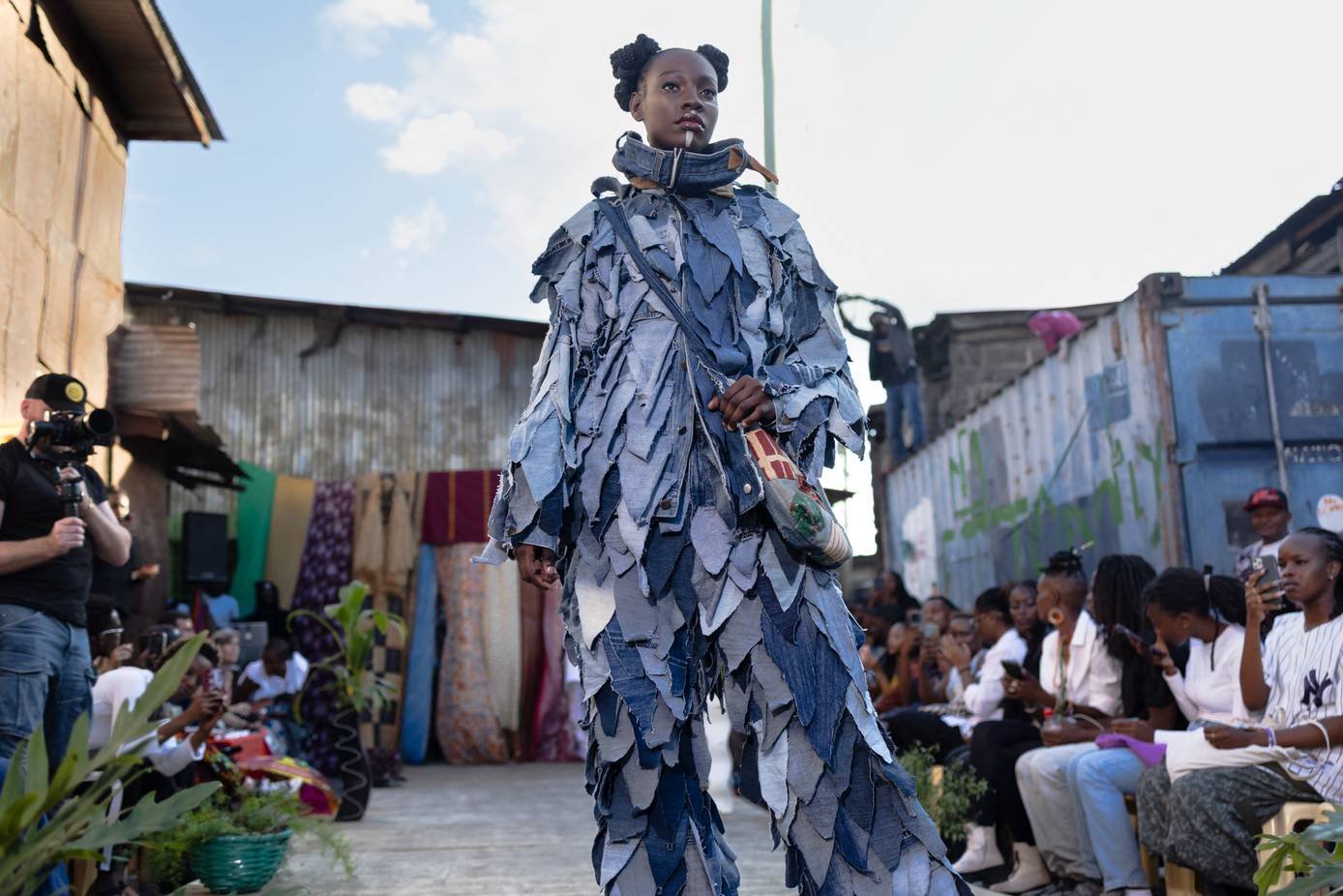
Enter Kenya’s young, underground designers. At a recent event dubbed the Gikomba Runway Edition, creatives like 25-year-old Morgan Azedy turned what many consider trash into high-fashion masterpieces. Azedy’s “Kenyan Raw” collection repurposed rejected denim and leather into gothic streetwear looks, earning praise from local traders and a past spot at Berlin Fashion Week. “I always see the environment around me dirty… I wanted to control pollution,” Azedy said, highlighting his motivation for upcycling.
Designer Olwande Akoth, who once traded second-hand bales herself, echoed this sentiment. Displaying kimonos made from upcycled fabric, she recalled how much of what she handled was unwearable. “It’s just garbage… you wouldn’t even give it to a beggar,” she said, emphasizing the need for sustainable solutions.
While the second-hand clothing trade provides jobs for hundreds of thousands across East Africa, it has crippled local textile industries. A 2016 attempt by the East African Community to ban used clothing imports was blocked after U.S. lobbyists intervened, threatening access to the African Growth and Opportunity Act (AGOA). Only Rwanda held firm and faced trade penalties. The AGOA deal itself expired last month, though discussions for renewal continue.
For Kenya’s upcycling pioneers, however, the discarded garments represent more than waste—they’re raw material for creativity, sustainability, and cultural expression. With international eyes turning to these designers, what started in Gikomba could soon be strutting down the runways of Paris and New York.